Research Programs
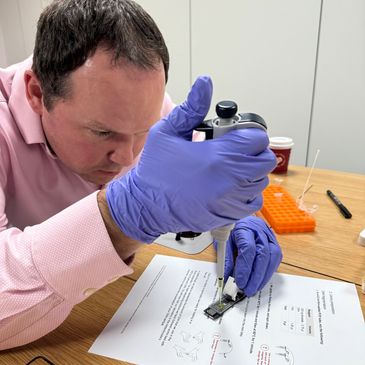
Cancer Genomics
Cancer Genomics
Cancer Genomics
- MSH2
- Lynch syndrome
- DNA repair
- Variant interpretation
- Precision oncology
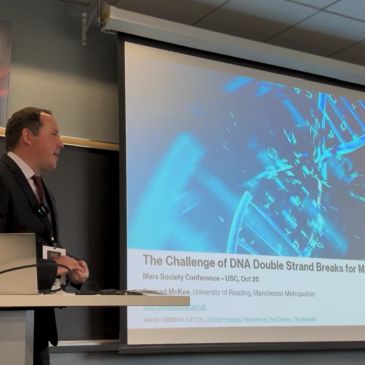
Space Medicine
Cancer Genomics
Cancer Genomics
- Radiation biology
- DNA damage
- Surgery in space
- Mars medicine
- Genomic medicine
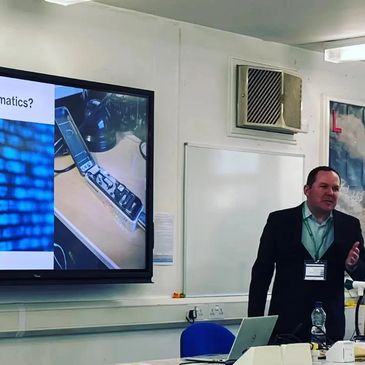
Artificial Intelligence
History and Philosophy of Science
History and Philosophy of Science
- AI in molecular biology
- AlphaFold
- AI ethics
- Computational biology
- Scientific discovery
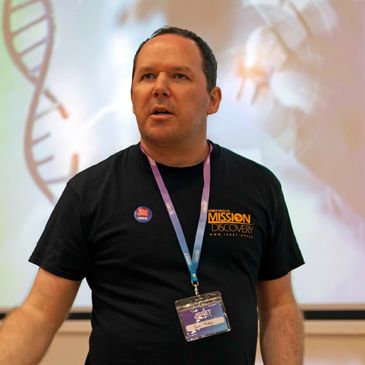
History and Philosophy of Science
History and Philosophy of Science
History and Philosophy of Science
- Arthur Eddington
- Philosophy of physics
- Scientific realism
- Science and religion
Research programs
My research explores how scientific knowledge can improve humanity's future: from understanding the molecular basis of disease, to preparing medicine for deep space exploration, to examining how artificial intelligence is transforming biological discovery, and investigating the historical and philosophical ideas that shape scientific progress. My work combines genomics, computational biology, space medicine, and the history and philosophy of science to address questions at the intersection of biology, technology and the future of human exploration.
1. Understanding genomic variation in human disease
Current projects:
Structural Assessment of MSH2 Variants in Lynch Syndrome (University of Reading PhD)
- Structural modelling of missense variants using protein structure, conservation and computational prediction to improve variant interpretation.
Structural Correlates of Pathogenicity in MSH2
- Identifying structural features that distinguish pathogenic from benign variants.
Computational Approaches to DNA Mismatch Repair
- Exploring how protein structure and bioinformatics can improve understanding of DNA repair mechanisms.
Future questions:
- How can artificial intelligence improve clinical variant interpretation?
- Can protein structural analysis become part of routine genomic medicine?
- How should functional, structural and clinical evidence be integrated?
- How can computational biology accelerate precision oncology?
Key publications:
- Structural correlates of pathogenicity in MSH2 missense variants (pending)
- Structural variant correlation with Lynch Syndrome within the MSH2 ATP binding site (pending)
- Additional publications will be added as the PhD progresses.
2. Preparing medicine for human expansion into space
Current projects:
Ethics and Operational Readiness for Autonomous Surgery Beyond Earth
- Developing ethical and operational frameworks for surgical autonomy during Mars missions.
DNA Double-Strand Breaks During Long-Duration Spaceflight
- Investigating radiation-induced genomic instability as a limiting factor for exploration.
Genomic Medicine for Future Space Exploration
- Examining how genomics, bioinformatics and gene editing can support astronaut health.
Cancer as a Design Constraint for Human Settlement of Mars
- Exploring cancer risk as a systems engineering problem for sustained human settlement.
Future questions:
- What medical capabilities must become autonomous before Mars missions?
- How can genomics personalise astronaut healthcare?
- Can AI support autonomous clinical decision-making in deep space?
- What are the biological limits of long-duration human exploration, and where can gene editing help?
Key publications:
- Taking Advantage of Genomics and Gene Editing for Space Exploration in the Next Decade (JBIS)
- The Challenge of DNA Double-Strand Breaks for Long-Term Spaceflight (JBIS)
- From AlphaFold to Astronauts: Implications of Bioinformatics and Computational Biology for the Space Age (JBIS)
- Medical Autonomy Beyond Low Earth Orbit Surgical Preparedness and Genomic Risk Stratification for Mars Exploration (submitted)
3. Artificial Intelligence and the future of biology
Current projects:
Artificial Intelligence in Molecular Biology
- Exploring how AI is transforming protein structure prediction, genomics and biomedical discovery.
AlphaFold and the Future of Computational Biology
- Examining the scientific implications of AI-driven structural biology.
AI in Precision Medicine
- Investigating emerging applications of machine learning in diagnostics and genomic interpretation
Future questions:
- How will AI reshape biological discovery?
- Can AI accelerate personalised medicine?
- What are the ethical implications of autonomous scientific discovery?
- How should scientists collaborate with increasingly capable AI systems?
Key publications:
- From AlphaFold to Astronauts (JBIS)
- Review of Life 3.0 by Max Tegmark (Christian Perspectives on Science and Technology)
- From AlphaFold to Autonomous Discovery: The AI Revolution in Molecular Biology (pending)
4. Scientific worldviews from Eddington to the Space Age
Current projects:
The History of the Arthur Eddington Memorial Lectures
- A historical analysis of one of Britain's most distinguished lecture series.
Selective Subjectivism and the Philosophy of Arthur Eddington
- Investigating structuralism, idealism and the philosophical foundations of twentieth-century physics.
Science, Philosophy and Religion
- Exploring historical and contemporary dialogue between scientific and philosophical worldviews.
Future questions:
- What can Eddington contribute to modern philosophy of science?
- How have scientific worldviews evolved since relativity and quantum theory?
- Can philosophy help guide emerging technologies such as AI and genomics?
- How should science communicate with wider society?
Key publications:
- PhD research on Arthur Eddington and Sir James Jeans
- History of the Arthur Eddington Memorial Lectures (in preparation)
- Book reviews and articles in philosophy of science and science-and-religion journals